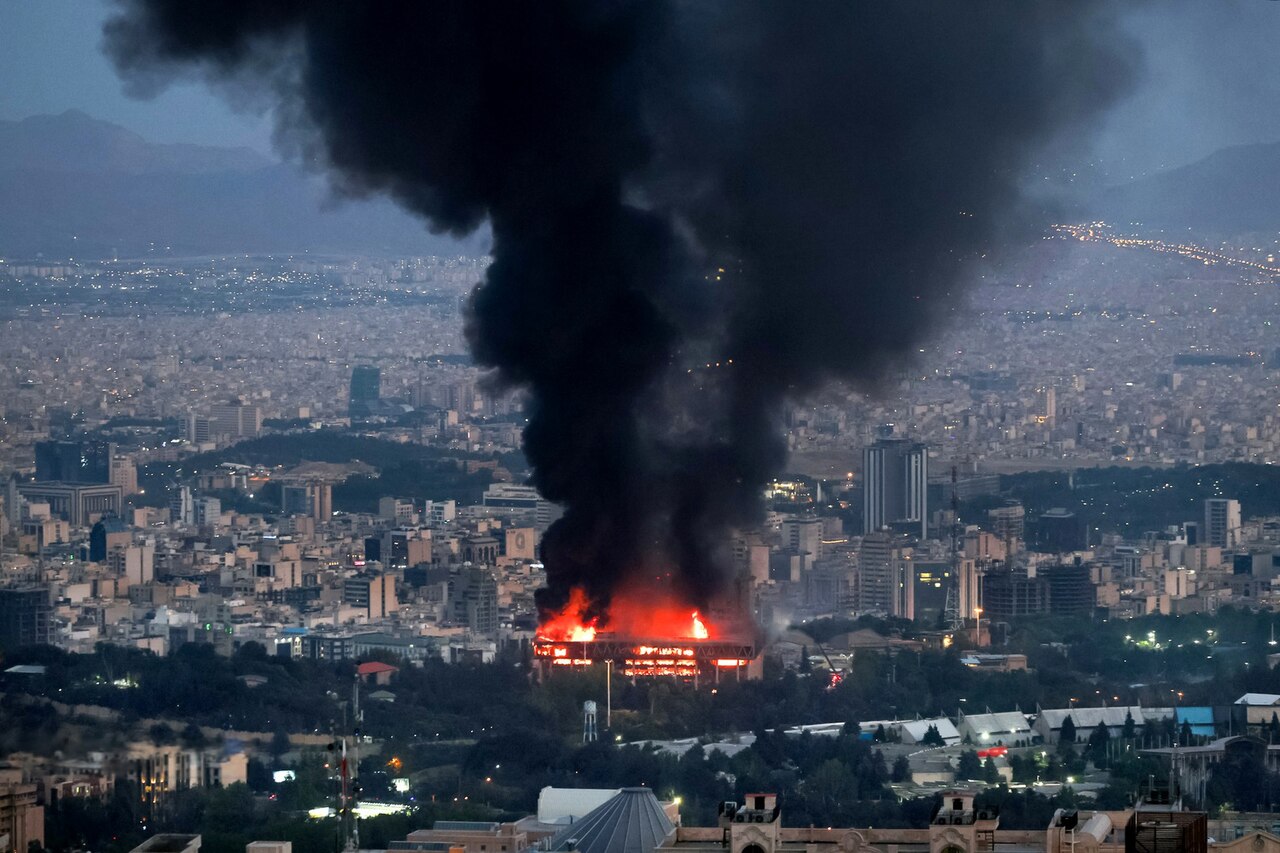
Iran Conflict: Understanding the War Economy Implications
The shadow of geopolitical tension constantly looms over the Middle East, with Iran frequently at its epicentre. Any significant escalation involving Iran, whether a full-blown military engagement or prolonged periods of heightened hostility, inevitably triggers profound economic consequences. These aren't limited to the immediate parties but ripple through global markets, affecting everything from energy prices to international trade and investor confidence. Understanding the complexities of an "iran krieg konjunktur" – Iran's war economy implications – requires a deep dive into its unique geopolitical position, its vast natural resources, and the existing pressures of international sanctions.
Iran's strategic location, particularly its control over the Strait of Hormuz, a critical chokepoint for a substantial portion of the world's oil supply, positions it as a pivotal player in global energy security. Coupled with its significant oil and gas reserves, this means that even the *threat* of conflict can send shockwaves through commodity markets. Beyond the immediate theatre, a conflict involving Iran could redefine regional alliances, shift global supply chains, and usher in an era of heightened economic uncertainty that few economies are truly prepared for.
The Geopolitical Chessboard and Iran's Economic Vulnerabilities
Iran's economy, already under considerable strain from decades of international sanctions, faces a unique set of challenges when contemplating conflict. These sanctions have significantly curtailed its access to global financial systems, limited its ability to sell oil freely, and hampered its technological advancement. In this context, the notion of an "iran krieg konjunktur" isn't merely theoretical; it's a constant consideration for policymakers and citizens alike. The nation has, in many ways, already adapted to a form of war economy, prioritising self-sufficiency and strategic industries over consumer-driven growth.
Any escalation would only magnify these existing vulnerabilities. Foreign direct investment, already scarce, would likely dry up entirely. Critical imports, from foodstuffs to industrial components, would become even more difficult and expensive to acquire. Internally, resources would be further diverted towards defence and military expenditures, straining public services and exacerbating inflation. The economic resilience Iran has cultivated under sanctions would be severely tested, pushing the limits of its ability to sustain its population and its strategic goals simultaneously. For a deeper look into these dynamics, one might consider
US-Iran Tensions: Economic Shifts in a Volatile Region.
Global Economic Ripples: Oil, Trade, and Investor Confidence
The most immediate and widespread economic consequence of conflict involving Iran would be felt in global energy markets.
The Strait of Hormuz: A Chokepoint for Global Energy
The Strait of Hormuz is arguably the world's most critical oil transit chokepoint. Located between Iran and Oman, it connects the Persian Gulf with the Arabian Sea and is the sole sea passage from the Persian Gulf to the open ocean for oil from Saudi Arabia, Iran, Iraq, Kuwait, Qatar, and the UAE. Approximately one-fifth of the world's total petroleum liquids consumption, or about 21 million barrels per day, passes through this strait. Any disruption, whether actual or merely threatened, inevitably sends crude oil prices soaring.
For global economies heavily reliant on stable energy supplies, a price surge of this magnitude translates directly into higher transportation costs, increased manufacturing expenses, and ultimately, inflation for consumers. Businesses face narrowed margins, and consumers face reduced purchasing power, potentially tipping fragile economies into recession.
Impact on International Trade Routes and Supply Chains
Beyond oil, the broader implications for international trade are immense. The Persian Gulf is a major shipping lane for various goods. An active conflict would lead to significantly increased insurance premiums for shipping, making trade routes through the region prohibitively expensive or entirely unviable. This would force re-routing, adding considerable time and cost to supply chains already strained by recent global events. Industries reliant on components or raw materials transiting through the region would face delays and shortages, potentially leading to production halts and increased consumer prices globally. Investor confidence would plummet, leading to capital flight from emerging markets and a general downturn in global economic activity as uncertainty drives risk aversion.
Iran's Internal War Economy: Resilience and Strain
Within Iran, the economic landscape during a period of intense conflict would undergo a profound transformation, moving even more decisively towards a full-scale war economy.
Resource Allocation and Domestic Prioritization
In a war economy, national resources are systematically reallocated from civilian consumption and investment towards military production and defence. Factories typically producing consumer goods might be repurposed for military equipment. The government would implement strict rationing of essential goods, diverting food, fuel, and medical supplies to the war effort. This shift would inevitably lead to severe shortages for the civilian population, driving up prices and creating black markets. Inflation, already a persistent challenge in Iran, would likely spiral out of control, eroding the purchasing power of ordinary citizens and exacerbating poverty. The national budget would be almost entirely consumed by military spending, leaving little for social welfare, infrastructure, or economic development.
Sanctions and Economic Diversification Attempts
Iran has developed considerable experience in navigating the constraints of international sanctions, fostering a degree of economic self-sufficiency and developing parallel trade networks. This long-standing adaptation means that a full-blown "iran krieg konjunktur" would, to some extent, build upon existing structures of resilience. However, the scale and intensity of a direct conflict would overwhelm these existing mechanisms. While Iran has made efforts to diversify its economy away from an over-reliance on oil, these efforts are long-term projects that would struggle immensely under immediate wartime conditions. Access to foreign currency would become even more critical and scarce, hampering imports necessary even for military production.
Analyzing Iran's War Economy Amidst Current Geopolitical Unrest sheds more light on these inherent challenges and adaptations. The informal economy, often a survival mechanism under sanctions, would likely expand but also become more chaotic and vulnerable.
Navigating Uncertainty: Strategies for Regional and Global Actors
In a volatile region like the Middle East, characterized by an ongoing "iran krieg konjunktur" narrative, both regional and global actors must adopt strategies to mitigate risks and plan for various contingencies.
Mitigating Risk in Volatile Environments
For global economies, the primary strategy involves diversifying energy sources and developing robust strategic reserves. Reducing reliance on any single region for critical supplies is paramount. Furthermore, investing in renewable energy and energy efficiency can lessen overall vulnerability to oil price shocks. For businesses, this means stress-testing supply chains, identifying alternative routes, and building redundancy. Risk management departments in multinational corporations are constantly evaluating geopolitical scenarios in the Gulf, factoring potential disruptions into their investment decisions and operational planning.
Regional actors, particularly Iran's neighbours, face an even more immediate imperative to foster economic resilience. This can include strengthening domestic food and water security, diversifying their own economies away from oil, and building strong international partnerships that can offer support in times of crisis. Diplomacy and de-escalation remain the most powerful economic tools, as preventing conflict saves untold economic costs.
Investment Outlook and Humanitarian Concerns
From an investment perspective, prolonged conflict or high tensions would render the entire region a "no-go" zone for most foreign direct investment (FDI). Capital would flee, and even domestic investors might seek safer havens abroad. This would stifle economic growth, create unemployment, and hinder development across the region for years, if not decades.
Beyond the financial metrics, the humanitarian cost of an "iran krieg konjunktur" is immense. Displaced populations, food insecurity, destroyed infrastructure, and a generation traumatized by conflict represent a cost that far outweighs any short-term gains or losses. The rebuilding phase, both physical and societal, would require monumental international effort and resources, underscoring the profound economic and social imperative for peace and stability.
Conclusion
The economic implications of any significant conflict involving Iran are vast, complex, and potentially catastrophic for both regional and global economies. From the immediate shockwaves in global oil markets caused by disruptions in the Strait of Hormuz, to the severe internal strains on Iran's already sanctions-beleaguered economy, the costs are monumental. Understanding the dynamics of an "iran krieg konjunktur" means acknowledging the interconnectedness of geopolitical stability, energy security, and global economic health. While Iran has demonstrated resilience under prolonged pressure, a full-scale conflict would push its internal economic structures, and indeed the entire global system, to breaking point. The imperative for diplomacy and de-escalation is not just political or humanitarian, but profoundly economic, aiming to avert a crisis whose financial and human tolls would be felt worldwide for years to come.